
In the modern world, two trends are very visible – internationalization and the search for more and more ecological solutions. As private individuals and companies, we want to reduce the production of waste (zero waste), and when it does occur, reuse it in the best possible way (recycling). No wonder then that international waste transport is also developing dynamically. What is worth knowing about it?
Decades ago, shipping waste abroad was considered immoral. It was associated with the exploitation of the poorer. Since we have generated garbage, we should, after all, dispose of it at our place, and not at our neighbors. However, when we are talking about contemporary transport within the European Union, we will much more often deal with a situation where the neighbors are able to process and reuse the transported waste more efficiently or cheaper. So both sides gain.
WASTE – FORMAL ISSUES
Pursuant to the statutory definition, waste is understood to mean any substance or object which the holder discards or intends to discard or is obliged to dispose of. In practice, however, determining whether a given good is waste may be a bit more complicated. The same clothing, when dry and wet, may be or not be waste respectively. Much also depends on the specifics of the company’s operations. What is waste for some, may be a valuable resource for others, the acquisition of which they will pay for.
If you produce waste, packaging, or market packaged products, tires, lubricants, vehicles, batteries or accumulators, electrical and electronic equipment, you must obtain an entry on the BDO Registry (see this government website for details). If you send waste to a foreign partner, you must additionally obtain a shipping permit. If you receive them from him – no.
Importantly, in order to be able to transport waste, you must also obtain an appropriate permit. Failure to do so may result in a fine of PLN 300,000 (in the case of cross-border transport). So it’s not worth the risk.
WASTE TRANSPORT PERMIT
In the case of large companies and regular shipments of waste, you can think about obtaining your own permit. However, this is problematic as each EU member state may have its own regulations in this field and permits must be obtained individually. So if you have a German permit, you cannot transport waste from an Austrian town located several kilometers from the border.
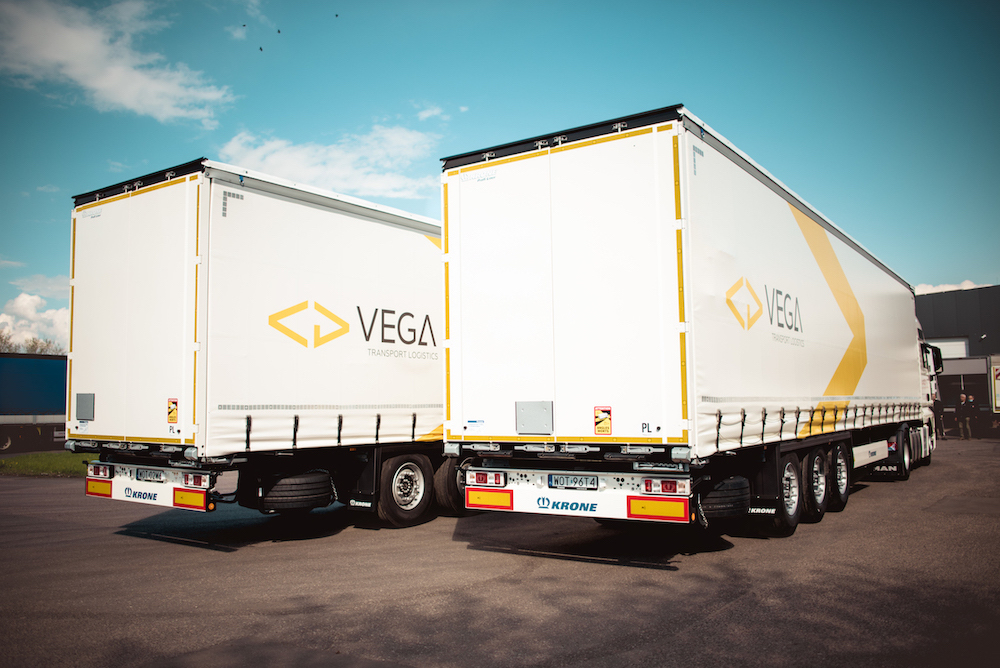
No wonder that many companies are looking for a proven partner who will be able to flexibly carry out transport throughout the region. We try to be such a partner in Vega Transport. At the moment, we have permits to transport waste in Poland, Germany, the Netherlands, Belgium and Austria. However, if these countries do not cover your needs, please contact us – we are developing dynamically and we are in the process of obtaining new permits.
TRANSPORT OF HAZARDOUS WASTE
For most wastes, shipping will be the same as shipping normal goods. We collect appropriate documentation, install the so-called A-Shield (white plate with the letter A – international waste label). Sometimes, however, the waste contains substances classified as hazardous and the organization of transport requires the support of an ADR advisor. In such a situation, you can also count on our support … but this is a topic for a separate entry.
Do you want to receive an offer for the transport of waste? Write to us!
 English
  Polish